Breaking News
Popular News


All voices matter
 By5e2793
Last Updated on January 26, 2026 by 5e2793
For many Arkansas bourbon and wine enthusiasts, Memphis is part of the regular hunting route. East Memphis stores—especially Buster’s Liquors & Wines—have long been destinations for store picks, premium wine, and the occasional allocated surprise.
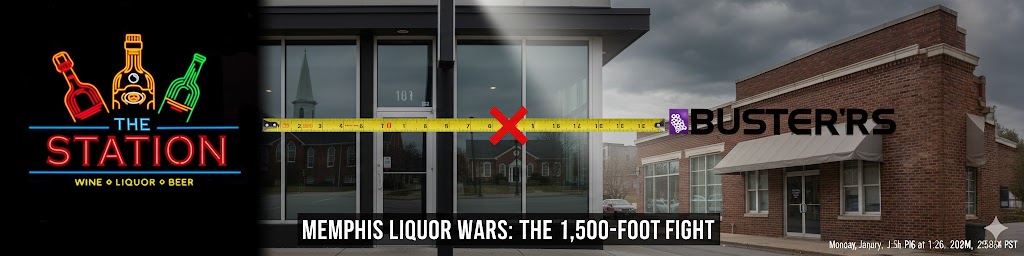
Now, a legal and regulatory battle unfolding in Memphis could reshape where collectors shop—and how liquor stores are allowed to operate—thanks to renewed scrutiny of the city’s 1,500-foot distance rule.
On January 26, 2026, Buster’s Liquors sent a detailed email to customers outlining allegations tied to a proposed new liquor store called The Station, escalating a dispute that already spans surveys, court rulings, and appeals to City Hall.
The Station is a proposed large-format wine and spirits retailer planned for 870 S. White Station Road in East Memphis, located in a former Bed Bath & Beyond space.
Local reporting has consistently described the project as a 25,000-square-foot, destination-style liquor store, positioning it as one of the largest spirits retail locations in Memphis. The concept emphasizes a modern shopping experience, premium inventory, and space designed to compete directly with long-established East Memphis retailers.
The project is led by Ethan Edwards, a Memphis entrepreneur, with reported management involvement from Nick Scott, a local chef associated with Alchemy in the Cooper-Young neighborhood.
Supporters have framed The Station as a locally built, independent alternative rather than a corporate chain.
Memphis liquor regulations include a long-standing requirement that liquor stores must be located at least 1,500 feet from certain sensitive uses, including churches and schools.
Crucially, the ordinance does not measure distance “as the crow flies.” Instead, the code specifies that distance is measured along the center line of the street or streets, a technical detail that has become the heart of the controversy.
Whether a measuring route turns down a particular street—or traces a different path—can determine whether a location is compliant or prohibited.
Several elements of this dispute are well established through Memphis media coverage and public records:
In its email to patrons, Buster’s Liquors—along with The Liquor Depot and D’s Wine & Spirits—made several allegations that go beyond what has been publicly verified through court filings or media reporting. These claims include:
These claims represent Buster’s position and have not yet been independently confirmed through publicly released court orders or documentary evidence.
Although the dispute is local to Memphis, it has broader implications for Arkansas consumers who regularly shop across the river.
If the 1,500-foot rule is reinterpreted or strictly enforced, industry observers warn that numerous existing Memphis liquor stores could face compliance challenges—not just new applicants.
A large new store like The Station could alter how premium bottles, store picks, and high-end wine are distributed in the Memphis market. More competition can sometimes mean more choice—but regulatory uncertainty can also reduce it.
For Arkansas collectors who rely on Memphis for selection gaps not always filled locally, the outcome matters.
The next major developments to watch:
Until those steps occur, the future of The Station—and potentially several existing liquor stores—remains unresolved.
What began as a zoning dispute has evolved into a broader fight over transparency, regulatory consistency, and how Memphis enforces decades-old liquor laws. With allegations now involving surveys, court rulings, and open-meeting requirements, the “Memphis Liquor Wars” are far from over.
For Arkansas bourbon and wine enthusiasts, this is one cross-river story worth watching closely.
Editor’s Note: This is a developing situation. ArkansasLiquor.com will continue monitoring Memphis City Council proceedings and any verified court filings related to this case.